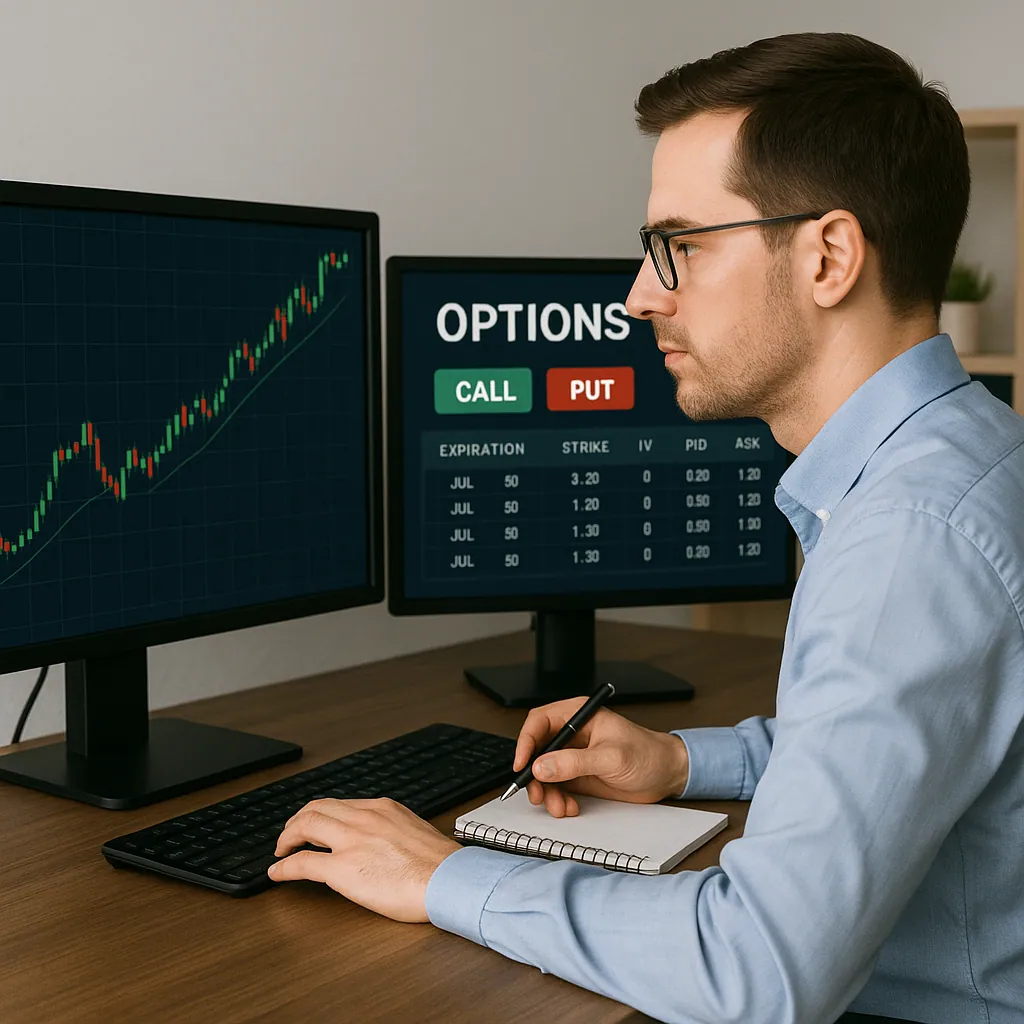
Why Options Trading Matters for Prop Traders
Options trading has become increasingly popular among traders looking to expand their strategies beyond traditional approaches. If you're exploring prop firm challenges or working toward a funded account, understanding options—their mechanics, risks, and practical applications—can help you decide whether they fit your trading plan.
What Is Options Trading and How Does It Work?
Options trading involves contracts that give you the right, but not the obligation, to buy or sell an underlying asset at a predetermined price before a specific expiration date. Think of it as purchasing flexibility rather than the asset itself.
There are two fundamental types:
- Call options: Grant you the right to purchase the asset at a set price.
- Put options: Grant you the right to sell the asset at a set price.
Traders use options for speculation, portfolio hedging, and generating income through premium collection. The appeal? You can control substantial positions with relatively small capital outlays. The catch? Options introduce complexities like time decay and multifaceted pricing dynamics that require careful study.
How Does Options Trading Compare to Other Trading Types?
Options differ significantly from stock trading, where you own shares outright. They offer more strategic flexibility but demand deeper understanding. Unlike futures trading, where you're obligated to fulfill the contract, options limit your downside to the premium you paid upfront. If you've worked with a day trading simulator or understand what is day trading, options represent an additional strategic dimension with distinct risk-reward profiles.
Can You Trade Options with $100?
Yes, starting with $100 is technically feasible. Some options contracts—particularly on lower-priced stocks or ETFs—trade at accessible premiums, and many brokers have eliminated minimum deposit requirements.
That said, a $100 account severely limits your choices. Commissions and fees eat into small accounts quickly, and you'll have fewer opportunities to diversify or manage risk effectively. If you're starting small, focus on education and conservative position sizing above all else.
Do I Need $25,000 to Trade Options?
Not necessarily. The $25,000 minimum applies specifically to pattern day traders under U.S. regulations—those executing four or more day trades within five business days in a margin account. This rule covers options if you're day trading them actively.
However, if you're swing trading or taking fewer positions, you can operate with considerably less capital. Check your broker's specific requirements and understand how the pattern day trader rule applies to your intended trading frequency.
Why Do 90% of Options Traders Lose Money?
Options trading has a steep learning curve, and many retail traders struggle. The reasons are consistent:
- Insufficient knowledge: Options pricing involves multiple variables that interact in non-obvious ways.
- Weak risk management: Skipping stop-losses or allocating too much capital per trade.
- Overtrading: Chasing opportunities without a coherent strategy.
- Time decay: Options lose value as expiration nears, which can quietly erode positions.
- Emotional decisions: Letting fear or excitement override your trading plan.
Success requires genuine education, consistent discipline, and a well-tested approach. There are no shortcuts.
What Are the Key Risks and Considerations When Trading Options?
Options introduce several distinct risk factors:
- Leverage: Amplifies both gains and losses, sometimes dramatically.
- Time decay: Every passing day reduces an option's value, especially for out-of-the-money positions.
- Complexity: Strategies can involve multiple legs, requiring solid understanding of Greeks, volatility, and market mechanics.
- Liquidity: Thinly traded contracts often have wide bid-ask spreads, increasing your execution costs.
- Margin requirements: Advanced strategies like naked option selling demand substantial margin and carry significant risk.
Before risking real capital, thoroughly understand these factors. Practice with a day trading simulator to test your strategies. If you're considering a prop firm challenge, review the firm's rules carefully—not all prop firms allow options trading, and those that do often have specific restrictions around position sizing and strategy types.
Getting Started: Steps to Begin Options Trading
- Learn the fundamentals: Understand how options are priced, key terminology, and basic strategies.
- Choose a suitable broker: Find a platform with robust options support and reasonable fees.
- Build a trading plan: Define your risk parameters, objectives, and preferred strategies.
- Practice extensively: Use a day trading simulator to test your approach without financial risk.
- Start conservatively: Begin with straightforward trades and modest position sizes.
- Review and adapt: Track your performance, identify patterns in your mistakes, and refine your methods.
Options Trading in Prop Firm Challenges
Traders pursuing prop firm challenges or funded accounts often ask whether options are permitted. The answer varies by firm. Some prop trading companies allow options trading within specific parameters, while others restrict traders to forex trading, futures trading, or stock trading exclusively.
Before entering a challenge, verify the firm's stance on options. Understand their drawdown rules, risk limits, and how options positions factor into payout calculations. Assumptions here can be costly.
Is Options Trading Right for You?
Options can add valuable strategic flexibility to your trading toolkit, but they're not for everyone. Success requires solid foundational knowledge, disciplined risk management, and realistic expectations about the learning curve.
For traders considering prop firm challenges, options knowledge is increasingly relevant—but only if your chosen firm permits them and you've developed genuine competence through practice and study. Align your trading approach with both the firm's requirements and your personal risk tolerance.
Trading involves risk. Past performance does not guarantee future results. This content is educational, not financial advice.
Ready to advance your trading? Explore SMP Fund challenges and rules on the site.