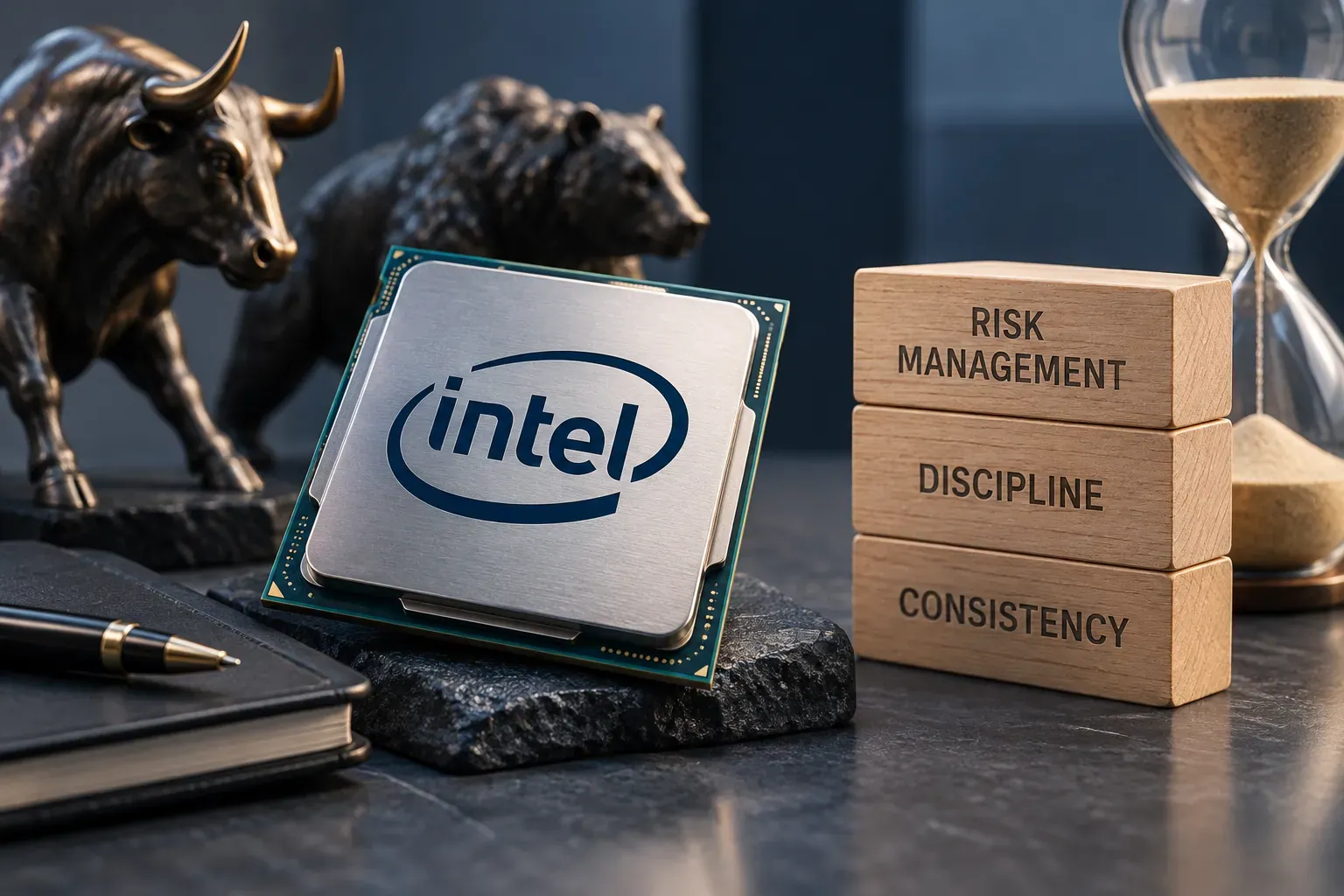
Trading INTC Stock in Prop Firm Challenges: What Makes It Unique?
Intel stock attracts prop traders for good reason—it's liquid, moves regularly, and offers clear technical setups. But that same volatility can wreck a challenge account if you're not careful. Trading INTC during a prop firm evaluation isn't just about finding entries. It's about staying inside strict drawdown and consistency boundaries while still capturing opportunity.
Here's how to approach Intel stock so you protect your account and give yourself a real shot at passing.
What Are the Key Prop Firm Drawdown Rules That Affect Trading Intel Stock?
Most prop firms enforce daily and overall drawdown limits to protect both sides of the relationship. When you're trading INTC, these rules matter more than usual because the stock can move sharply intraday.
- Daily Drawdown: This caps your loss for a single session. If Intel gaps down on earnings or reacts to sector news, you can hit this threshold before you realize it.
- Overall (Max) Drawdown: This tracks your total loss from peak balance. Repeated small losses or one bad day in INTC can push you toward this limit faster than you'd expect.
At SMP Fund, drawdown rules are transparent and designed to encourage disciplined execution. You always know where you stand, which matters when trading a stock as active as Intel.
How Can Prop Traders Manage Risk When Trading INTC Stock During a Challenge?
Risk management in INTC goes beyond slapping on a stop loss. Here's what actually works:
- Position Sizing: Calculate share size based on your stop distance and daily risk cap. If your daily limit is $500 and your stop is $0.50 away, you can take 1,000 shares max. Adjust for volatility—Intel moves fast during news cycles.
- Pre-market and After-hours Caution: INTC can swing hard outside regular hours. Many firms, including SMP Fund, restrict or prohibit trading during these periods. Check the rules before placing any order.
- Use Hard Stops: Always set server-side stops, not mental ones. This protects you from sudden spikes or gaps that can blow through your risk plan.
- Avoid Overtrading: Chasing losses or taking too many trades eats into your drawdown buffer quickly, especially with a stock as active as INTC.
What Trading Strategies Work Best for Intel Stock in Funded Account Evaluations?
Not every approach fits a prop challenge. For INTC, these strategies align better with evaluation requirements:
- Trend Following: Intel often trends cleanly after earnings or major announcements. Wait for confirmation on higher timeframes and use tight stops to protect capital.
- Range Trading: During quieter periods, INTC respects support and resistance zones. Identify these levels and trade with clear rules for entry and exit.
- News/Event Trading: Earnings and product launches move Intel sharply. If your firm allows news trading, reduce size and tighten stops during these windows. SMP Fund's rules are straightforward—review them before trading around events.
Pick strategies that produce consistent, repeatable results. High-risk, all-in trades rarely align with what prop firms are looking for.
How Does Intel Stock Volatility Impact Consistency Requirements in Prop Challenges?
Consistency is a core evaluation metric in most prop challenges. Your profits and losses shouldn't cluster in one or two trades. With INTC, sudden volatility can tempt you to swing for a big win, but that approach usually backfires.
- Spread Out Your Trades: Aim for steady gains over multiple sessions instead of relying on a single large move.
- Control Trade Size: Don't increase size dramatically after a win or loss—this can trigger consistency violations.
- Document Your Process: Keep a trading journal to track your INTC trades and review them for patterns.
SMP Fund values traders who demonstrate steady execution over time. Their consistency rules reward disciplined, professional trading—an approach that fits well with the realities of trading Intel stock.
What Common Mistakes Should Traders Avoid When Trading INTC Stock in Prop Firm Challenges?
Even experienced traders stumble on these pitfalls:
- Ignoring News Events: Intel reacts sharply to news. Failing to check the calendar or trading during restricted periods can lead to unexpected losses or rule violations.
- Oversizing Positions: Letting confidence in a setup lead to oversized trades is the fastest way to breach drawdown limits.
- Chasing Losses: Trying to recover a loss with a bigger trade usually compounds the problem, especially with a volatile stock like INTC.
- Neglecting Prop Firm Rules: Every firm has its own nuances. At SMP Fund, rules are clearly outlined—review them regularly to avoid accidental breaches.
- Overtrading on Volatile Days: High volatility creates a false sense of urgency. Stick to your plan and avoid impulsive trades.
Trade Intel Stock With Discipline and Clarity
Trading INTC in a prop firm challenge is about more than finding the right entry. It's about understanding and respecting drawdown and consistency rules, managing your risk, and maintaining discipline—qualities that SMP Fund's challenge structure is designed to reinforce. If you approach Intel with a clear plan and risk controls, you'll put yourself in the best position to succeed.
Trading involves risk. Past performance does not guarantee future results. This content is educational, not financial advice.
Ready to take the next step? Explore SMP Fund challenges and rules on the site.


